Prediction markets are one of 2026’s most closely watched financial trends. They draw millions of participants who trade contracts on everything from elections to sports event outcomes. The rapid growth of prediction markets has sparked debate among psychologists, economists, and regulators about how people perceive risk and probability. Are participants investing, gambling, or engaging in something that’s on the fine line between the two?
What Are Prediction Markets?
Prediction markets are exchange-style platforms where participants buy and sell contracts tied to the outcome of a real-world event. The most common examples include elections, economic reports, or sports games. Participants price these instruments, known more widely as event contracts, on a scale from 0% to 100%, which reflects the market’s collective estimate of how likely an outcome is. A contract that resolves in favor of the predicted outcome pays out in full. In the meantime, the one that resolves against it loses its worth and expires.
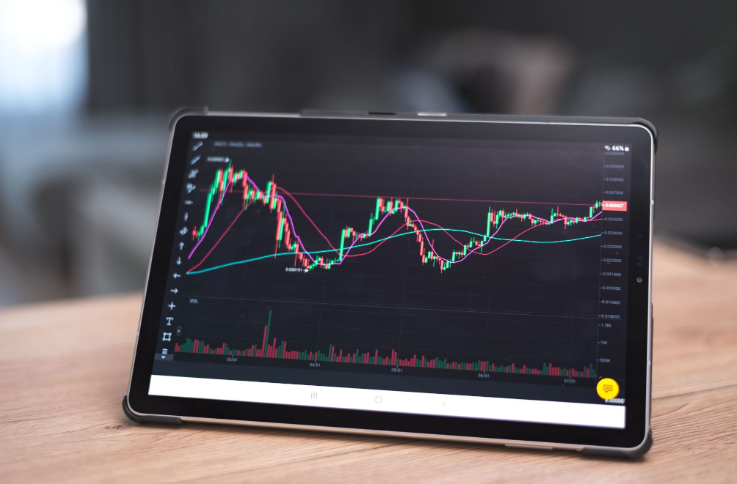
Investment News, among other sources, claims that there has been a surge in participation over the past few years. Major platforms like Kalshi and Polymarket have been expanding, and trading volume on sports- and politics-related markets is now estimated in billions. Because real money is at stake in prediction markets, market prices act as a kind of crowdsourced forecast. Participants tend to view it as more reliable than relying solely on expert opinion.
Prediction markets also share one feature with other forms of online entertainment: users can be drawn to products that offer uncertain outcomes and immediate feedback. For those interested in experiencing casino games without real-money stakes, Slotozilla covers free-to-play slot options separately from financial prediction products. This distinction allows readers to explore chance-based entertainment without confusing it with real-money financial activity.
Why Prediction Markets Feel Different from Traditional Investing
Prediction markets have the language and infrastructure of finance. Participants tend to speak of trading, buying shares, and managing positions. In the United States, the Commodity Futures Trading Commission oversees these platforms. This is the same federal regulator that also supervises futures and derivatives markets. Because of such a regulatory framework around them, prediction markets act more as an extension of investing rather than a form of gambling in its conventional sense.
Investing vs. Predicting Outcomes
There is a clear difference between traditional investment and predicting outcomes of events:
- Traditional investing means acquiring an ongoing stake in an asset, such as a company or a bond, whose value can fluctuate and compound over years or decades;
- Event contracts are tied to a single, time-bound outcome with a fixed resolution date, after which the position no longer exists;
- Exit works differently in each case. A share can be held indefinitely or sold at any point without a deadline, while an event contract has a settlement date that ends the position regardless of what the holder wants.
The binary payout applies only to a contract held through settlement. Before that point, positions on an exchange trade at a market price that moves with perceived probability, so a holder can sell early and lock in a partial gain or loss rather than waiting for a full payout or zero. That secondary market is the structural difference between an exchange-traded event contract and a bet placed with a bookmaker, where the stake is committed until the event resolves.
Where Gambling and Prediction Markets Overlap
Despite the financial vocabulary, prediction markets share several structural features with gambling products. These include continuous availability, rapid re-entry after a loss, mobile-first design, and notifications that encourage participants to check the update status frequently.
The majority of the public still categorises these platforms closer to gambling rather than to investing, even as usage grows. Some research suggests that there is a direct link between the appeal of activities that involve chance and a possible payout and the underlying psychology of risk and reward. This can be a sports wager, a casino game, or an event contract.

The Psychology of Risk in Prediction Markets
In 1981, psychologists Amos Tversky and Daniel Kahneman demonstrated in their paper “The Framing of Decisions and the Psychology of Choice” that how a choice is presented can change how rational and calculated a decision feels to the person. The framing-effect research showed that identical probabilities can produce different decisions depending on their presentation. Here is how it applies to prediction markets:
| Research finding | Application to prediction markets |
| People can perceive the same probability differently depending on how it’s presented | Displaying an outcome as 62% rather than 6 in 10 makes the same information feel more precise |
| Framing shifts how rational a decision feels | A percentage-based interface can make a bet feel like the product of analysis |
| People often don’t recognise when framing is driving their confidence | Participants may not tell the difference between “the market says 62%” as data versus a reflection of the public mood |
At its core, the underlying research says that the format of a probability defines how justified a certain bet feels afterward. In prediction markets, displaying probabilities as precise percentages may make a position feel more analytically justified than it actually is.
Confidence and Overconfidence
Financial advisors have noted that users tend to expect quick feedback and clear wins or losses after frequent exposure to fast-resolving, binary bets. In addition, this mindset can influence other financial decisions. Clients begin favoring short-term, emotionally charged bets over disciplined, long-term strategies. As one’s experience with such a platform grows, so does the confidence in one’s own forecasting ability. This often happens irrespective of the participant’s actual predictive accuracy.
Cognitive Biases and Probability
Several well-documented cognitive biases shape participants’ behavior on prediction markets. They include confirmation bias, availability bias, and overconfidence bias.
- Confirmation bias makes participants seek information that supports a position they already hold;
- Availability bias forces users to treat recent or emotionally vivid events as more important than they statistically deserve;
- Overconfidence bias can push participants to trade more frequently and take larger positions than their actual edge would justify.
When brought together, these tendencies can make markets feel more predictable than they truly are. This, in turn, encourages repeated participation even after losses.
Regulation and the Future of Prediction Markets
The CFTC regulates prediction markets as financial exchanges, keeping them legal federally, and the scale has grown accordingly. Combined monthly volume on Kalshi and Polymarket now approaches $220 billion, up from $28 billion a year earlier.
State resistance has moved into the courts. Nevada and Minnesota have banned the products outright, with both bans under challenge, and fifteen other states were in active disputes as of June 2026. The Fourth Circuit heard Maryland’s case in May with 38 states filing amicus briefs, while an Arizona court issued the first merits ruling favouring platforms.
Public opinion has hardened alongside it. A Morning Consult poll of 15,029 adults in March 2026 found 81 percent classified sports trading on these platforms as gambling, and 73 percent said terms like “event contracts” obscure the risks for younger users.