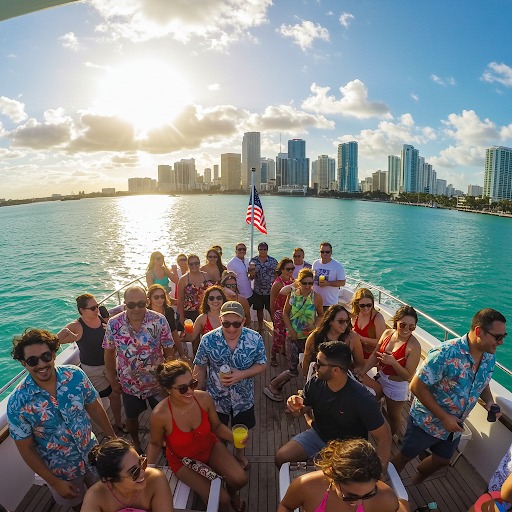
Miami’s coastline sets the tone for everything the city becomes. The light off the bay, the shifting neighbourhoods and the rhythm of the water all shape how you experience it. Spend a little time near the shore and the city starts to make sense in a way the streets cannot match.
Miami is a city you understand through its coastline long before you learn its streets. The light off Biscayne Bay sharpens the skyline, the islands shape the view and the movement on the water sets the rhythm for everything around it. Stand near the shore for even a moment and you start to see how the city works. That is why so many visitors begin on the bay to make sense of the curves and bridges, and the open water that ties the neighbourhoods together. The coastline tells the story first, then the rest of Miami fills itself in.
How the Coast Shapes Miami’s Personality From the Moment You Arrive
Miami Boat Tours make that easy because the service runs on a fixed 90-minute schedule with online reservations, a straightforward check-in at the downtown marina, and bilingual guides who handle the flow so you do not spend the first half of the trip figuring out logistics. You settle in, the boat pulls out on time so that the tour lets you focus on how the shoreline shapes the city rather than on the details of getting there.
You notice it in the way the light moves. Early mornings are soft and open, the kind of mornings where you can walk along the sand and hear more birds than traffic. Late afternoons wrap the water in gold, and the skyline takes on a softened outline. It’s also the side of Miami most people experience first.
The region drew 26.2 million visitors in 2023, according to the Greater Miami Convention & Visitors Bureau, and beaches remain the top reason they come. Tourism pours more than $20 billion into the local economy each year, and you can feel that scale in the way the city breathes and dances along the coast. You can be standing on a crowded boardwalk or a quiet stretch of beach, yet the scene still feels personal because the coastline shifts its mood every hour. You understand Miami better once you have spent time near the water, and the city’s flow starts to make sense in a way that brings people back again and again.
Where Each Stretch of Shoreline Feels Like Its Own Neighbourhood
Moving along Miami’s coast feels like passing through a string of self-contained worlds. Sunny Isles, once a 1950s motel strip known as “America’s Riviera,” now rises with residential towers that give the area its slower family rhythm. Mid Beach shifts the mood. It sits near the heart of Miami Beach’s Art Deco District and is home to over 800 protected buildings, which gives the shoreline a curated, historic atmosphere.
South Beach welcomes more than six million visitors a year, and the shoreline often doubles as a backdrop for Art Basel events and the occasional celebrity sighting. When evening comes, the Miami Sunset Cruise offers a quieter way to take in the skyline.
Crossing toward Key Biscayne softens everything again. Bill Baggs, home to the 1825 Cape Florida Lighthouse, regularly appears on top beach lists, and the slower pace makes it feel closer to a local refuge than a tourist stop. It is one of the clearest signs that Miami’s coastline holds more than one identity at a time.
Culture Thrives When the Water Is Always Close By
Miami’s coastline shapes more than the scenery. It also shapes the way people create and gather, to tell their stories. You’ll notice it when you walk past waterfront museums or see temporary stages being built near the sand. The city’s artists and performers often work within sight of the ocean and that closeness gives their work a particular kind of energy.
You can see this in the way Miami attracts outside talent. NYU faculty have premiered work in the city, including performances showcased at the Rubell Museum, where Miami’s art audiences respond to stories that carry both local detail and wider cultural themes. It is the same pattern you find across the coastline. Creative projects have a different feel when they sit so close to the water, and you can pick up on the energy: something’s different here. Something magical.
As you move along the shore you start to understand how the environment is the breathing heart of the city’s cultural pulse. Music drifts out of cafés while dancers rehearse in open-air spaces, and exhibitions move in and out of beachfront galleries. The coastline gives all of these moments a shared backdrop, and you begin to feel that Miami’s creative identity is tied to the tide lines just as much as to the streets behind them.
Creativity That Lives Above and Below the Surface
Miami has a habit of turning the coastline into its own kind of gallery. You see it in places like the South Pointe Pier sculptures, the Ocean Drive Art Deco murals, and the rotating public pieces along the Miami Beach Boardwalk. They sit close to the sand and feel shaped by the light and the sea air, which makes the shoreline feel as much like a creative space as a scenic one.
Some of the most interesting work sits below the surface. Miami Beach supports underwater installations such as the South Beach Reef Garden sculptures, including one which doubles as coral habitat. Artists design them to interact with currents, light, and marine growth, which turns the ocean floor into an evolving gallery rather than a static display.
Once you spend time near the water you start to notice how these ideas influence the rest of the city. Beach paths lead to small cultural pockets, and even a quiet stretch of sand can feel connected to something creative happening nearby. The coastline becomes a place where art and environment meet in a way that feels intentional and natural, and that blend gives Miami much of its character.
The Beaches Locals Love and Why They Feel Different From Tourist Spots
Not every part of Miami’s coastline is shaped by crowds. Some stretches feel quieter and rooted in everyday routines. Bill Baggs Cape Florida State Park shows you a slower side of the city, where families set up picnics under the trees and morning walkers move along the sand in near silence. It feels like a place locals claim as their own.
Haulover Beach carries another kind of calm. The long shoreline and easy parking create a relaxed atmosphere that still sits close to the city. On the right day you see people heading into the water with surfboards, and on quieter days the beach turns into an easy spot to settle in without much movement around you.
Hollywood Beach, just outside Miami, offers a livelier mix with its broadwalk full of runners and cyclists. It gives you a different view of how people use the coastline without overwhelming you with noise.
EMBED YOUTUBE VIDEO ON SITE HERE: https://www.youtube.com/watch?v=tyMAWQz-ks8
Once you start exploring these beaches for yourself, the contrasts become clear. Miami’s coastline feels personal in a way many cities do not, and that variation is a big part of why people return.
The Practical Side of Visiting a City Built Around the Water
Most visitors enter Miami through Miami International Airport, which moves more than 50 million passengers a year and sits about 20 minutes from Miami Beach. Rideshares are common for moving between the shoreline and the mainland, and the causeways make the trip straightforward.
Accommodation clusters along the coast in clear pockets. South Beach has the highest concentration of hotels, especially during winter peaks, while Mid Beach offers a quieter mix of historic and modern stays. Sunny Isles leans toward longer family visits, and Key Biscayne remains the calmest option with fewer properties and a park-driven pace.
Getting between these areas is simple. The distances are short, often ten to fifteen minutes, yet the shift in atmosphere makes each stop feel distinct. These small practical details shape the experience as much as the scenery itself.
What Stays With You After Leaving the Shore
Miami gives you a coastline that keeps its hold long after you step away from the water. You remember the colours, the changes in pace and the way each neighbourhood rises or quiets depending on where the sand meets the city. You also remember how the shoreline helped you make sense of everything else. The museums, the beach paths, the evening lights, the small local corners. All feel connected once you have seen them from the water.
That is the part visitors talk about when they return home. Miami’s coast does not feel like an add-on to the city. It feels like the element that guides the rhythm, and every stretch offers something that stays with you. Once you have followed the coastline from one end to the other you realise that this is the version of Miami people carry with them, the version shaped by the tide and the views, and the sense that the city begins at the water’s edge.
